How the troop works
Our Program
A Scout-led troop, organized by patrols, out of doors. Here is what that looks like on an ordinary Tuesday and an ordinary month.
Weekly meetings
Meetings start at 7:00 PM and follow the same shape most weeks. A Scout runs the agenda; the Scoutmaster speaks for about two minutes, at the end.
Guests are welcome at any meeting. Wear whatever you own, a uniform is not expected until a Scout has joined.
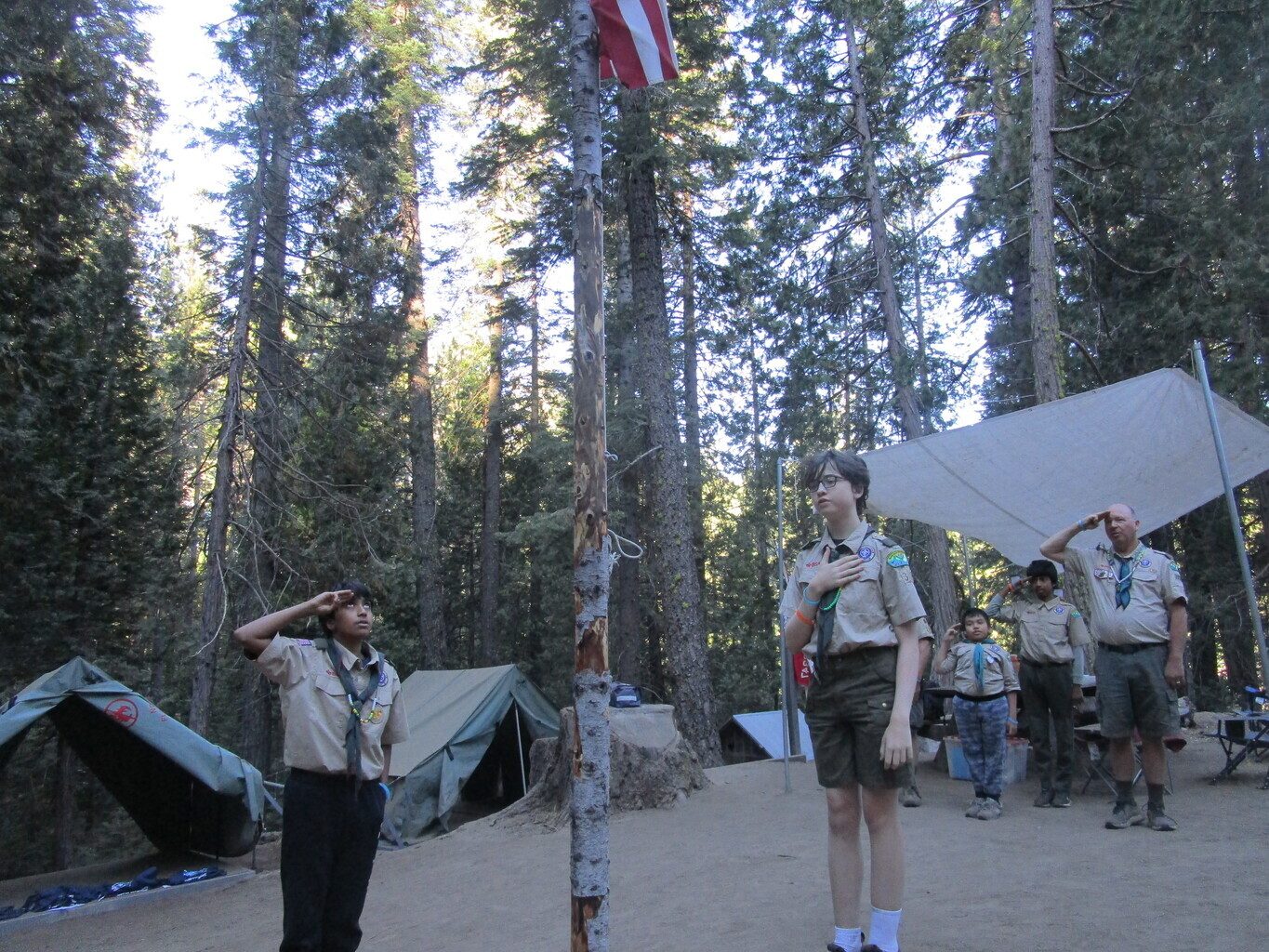
- 1OpeningFlag ceremony, the Oath and Law, and a uniform check. Full Class A, head to toe.
- 2Patrol timePatrols meet to plan the next outing, pick grubmasters, and sort out food and gear.
- 3Merit badge or skillsUsually taught by a Scout. Communication, Personal Management, first aid, navigation.
- 4AdvancementRequirements signed off, Scoutmaster conferences, and boards of review before a court of honor.
- 5GameHosted by a Scout. Loud, and usually a skill in disguise.
- 6Scoutmaster minuteTwo minutes of something worth thinking about on the way home.
The patrol method
Scouting’s founder called the patrol method “the one essential feature”, not a technique, but the whole system. A patrol of six to ten Scouts elects its own leader, keeps its own gear, plans its own menu, and cooks its own food.
On a campout the adults camp separately. Patrols pitch their own tents, run their own duty roster, and eat what they cooked, whether or not it worked. That is where the learning is.
Patrols compete against each other at Camporee and Klondike, which does more for skills practice than any amount of adult instruction.
- Patrols elect their own Patrol Leader every six months
- Each patrol owns its cook kit, stove, and dining fly
- The Patrol Leaders' Council sets the troop calendar, not the adults
- New Scouts spend their first year in a patrol with a Troop Guide
Leadership development
Holding a position is the start, not the end. Troop 394 sends Scouts through a formal leadership track that runs from an in-troop course all the way to the national high adventure bases.
Every Scout with a position
Introduction to Leadership Skills for Troops (ILST)
Run in-troop each spring after elections. The baseline course for any position of responsibility.
Ages 13+, First Class and above
National Youth Leadership Training (NYLT)
A week-long council course. The single biggest jump in confidence we see in a Scout.
NYLT graduates
National Advanced Youth Leadership Experience (NAYLE)
Held at the national high adventure bases. Leadership under real backcountry pressure.
Elected by their peers
Order of the Arrow
Scouting's national honor society, recognizing Scouts who best live the Oath and Law.
Service & community
"Do a Good Turn Daily" is the Scout slogan, and Troop 394 has always treated it as work rather than a motto, service projects for the Elks Lodge that charters us, for local institutions, and for whichever cause a Life Scout takes on for their Eagle project.
Scouting for Food
The council-wide food drive each fall. Scouts bag-drop a neighborhood one Saturday and collect the following week.
Eagle Scout projects
Every Life Scout plans and leads a project that benefits a school, park, library, or nonprofit. The troop turns out to help.
Conservation & trail work
Trail maintenance at council camps and local open space, plus Leave No Trace practice on every outing.
See a meeting for yourself
Reading about the patrol method is one thing. Watching a 13-year-old run a room of forty is another.